
MAINE COALITION FOR NORTH ATLANTIC RIGHT WHALES
Protect Whales. Keep Fishermen Fishing.
North Atlantic right whales face extinction due to human activity.
The future of the species relies on our willingness to adapt.
The Coalition's mission is to provide accurate information about critically endangered North Atlantic right whales and advocate for policies to save them. Accidental fishing gear entanglements, including those in Maine lobster gear, are a threat to the health and survival of right whales. This threat is well documented in a growing body of peer-reviewed research, scientific findings, and news sources, which you can explore here on the Coalition website.
The bottom line: entanglements can be prevented with targeted solutions that allow fishermen to keep fishing while protecting whales.
KNOW THE FACTS:
Entanglement in fishing gear is the leading cause of injury and death for North Atlantic right whales.
- Entanglements occur when rope or mesh from fishing gear becomes wrapped around a whale’s body. Entangling lines can cause injuries that leave scars behind – these appear bright white against a whale’s black skin.
- Researchers at the New England Aquarium analyzed thousands of photographs of 833 individual North Atlantic right whales alive since 1980 and detected 1,938 entanglement events. In other words, 726/833 or > 87% of North Atlantic right whales have been entangled at least once. Many individuals get entangled multiple times in their life – some as many as nine times.
- Most of these 833 whales shed the entangling gear on their own; in 92% of the 1,938 identified entanglement events, the gear was never recovered and could be studied or linked to a particular fishery. This means that entanglements happen often, but it is rare to document a whale with attached gear that can be identified.
- Since 2017, an Unusual Mortality Event (UME) has been declared for North Atlantic right whales. The UME is due to human impacts, and 170 whales (44% of the population) have been affected. Entanglement in fishing gear is the most common threat to North Atlantic right whales in the UME.
- Some entanglements kill whales quickly through drowning, while others last for months and cause a slow and painful death. Entanglement is an unintentional brutality that should not be tolerated for any animal.
- Even if entanglement doesn’t kill a whale outright, it can cause injury and chronic stress that impacts growth, development, and reproductive success. These impacts prevent recovery and drive the population closer to extinction.
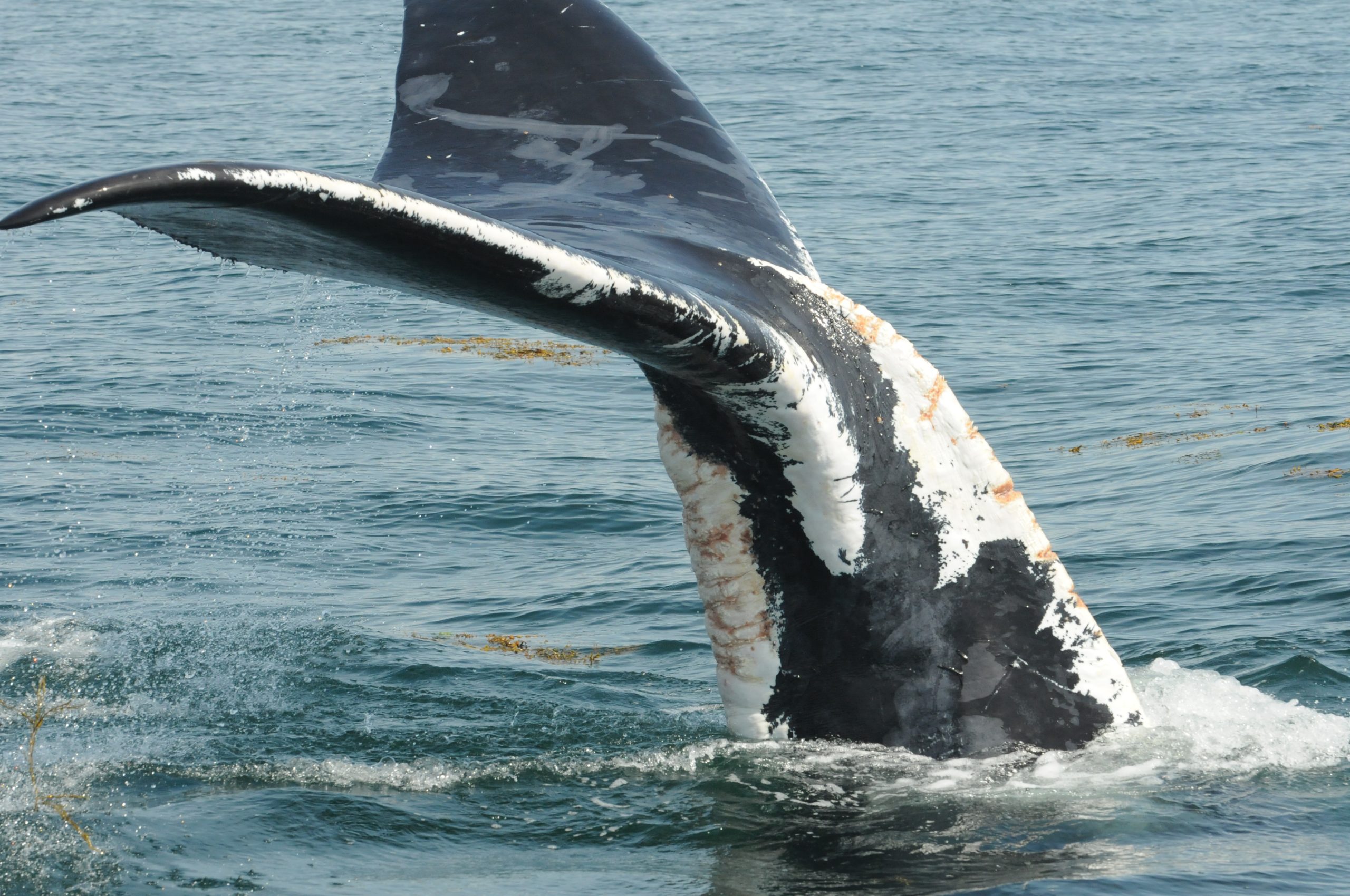
Right whale #3308 “Sierra” has extensive scarring along her tail stock and flukes from entanglement injuries. Credit: New England Aquarium under DFO Canada SARA permit.
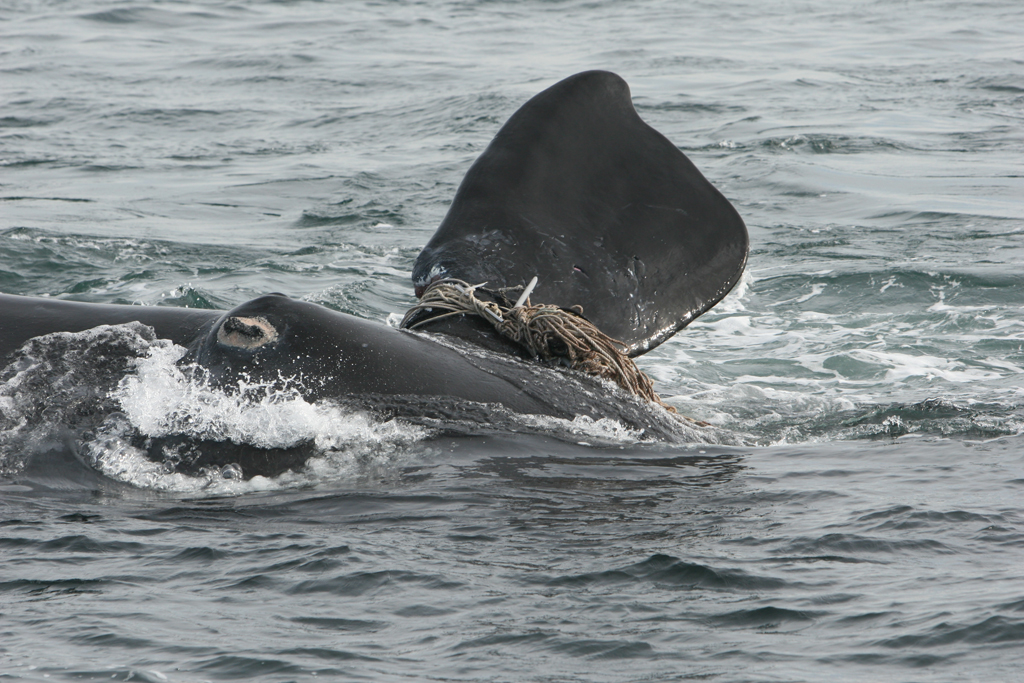
Right whale #3346 “Kingfisher” with gear around right flipper. Some of this gear removed during disentanglement events were traced back to the Maine lobster fishery. He has not been seen since 2015 and is presumed dead. Credit: Florida Fish & Wildlife Conservation Commission, taken under NOAA permit # 932-1905/MA-009526.
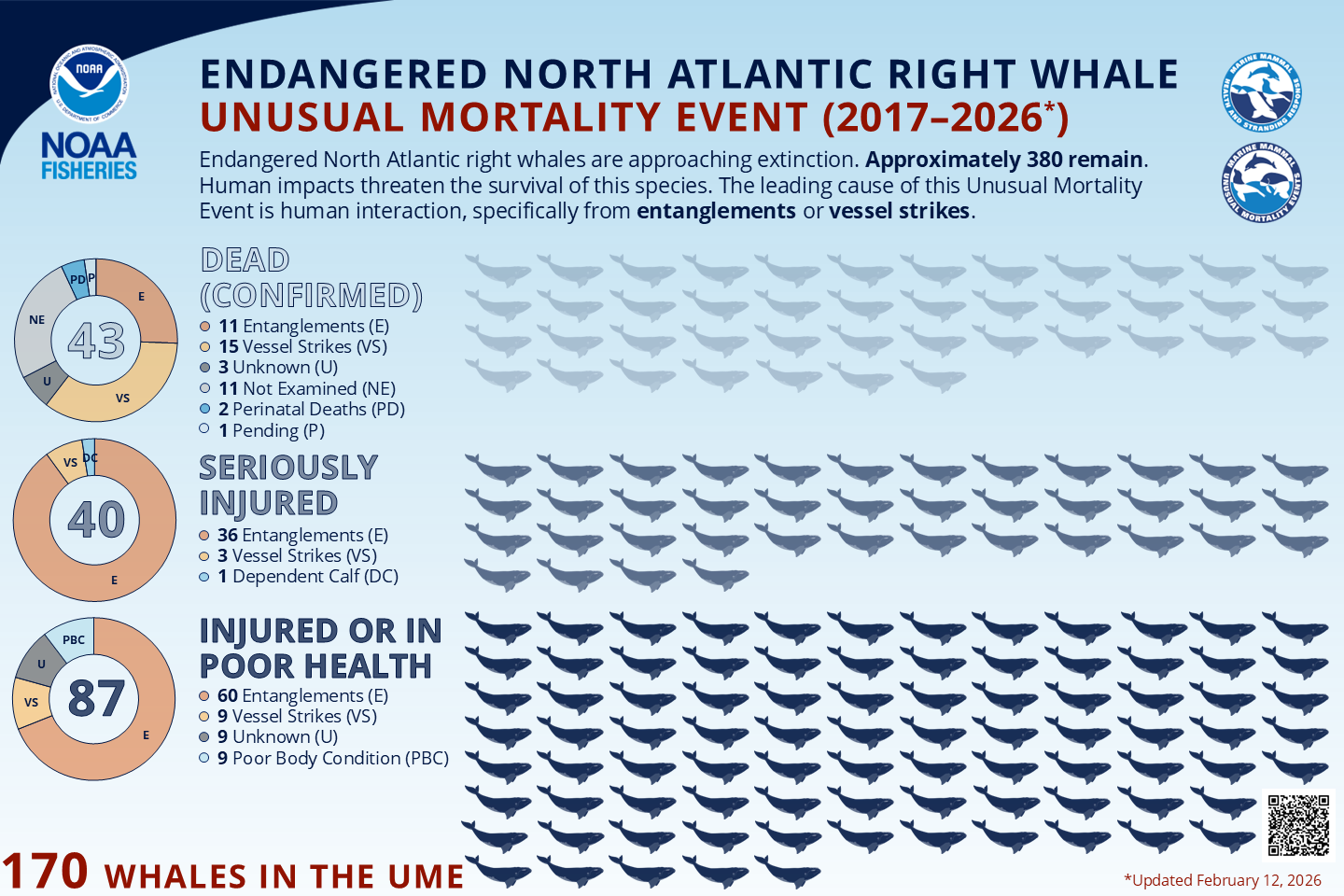
Entanglement is the leading cause of injury and death to North Atlantic right whales during the ongoing Unusual Mortality Event. Credit: NOAA Fisheries.
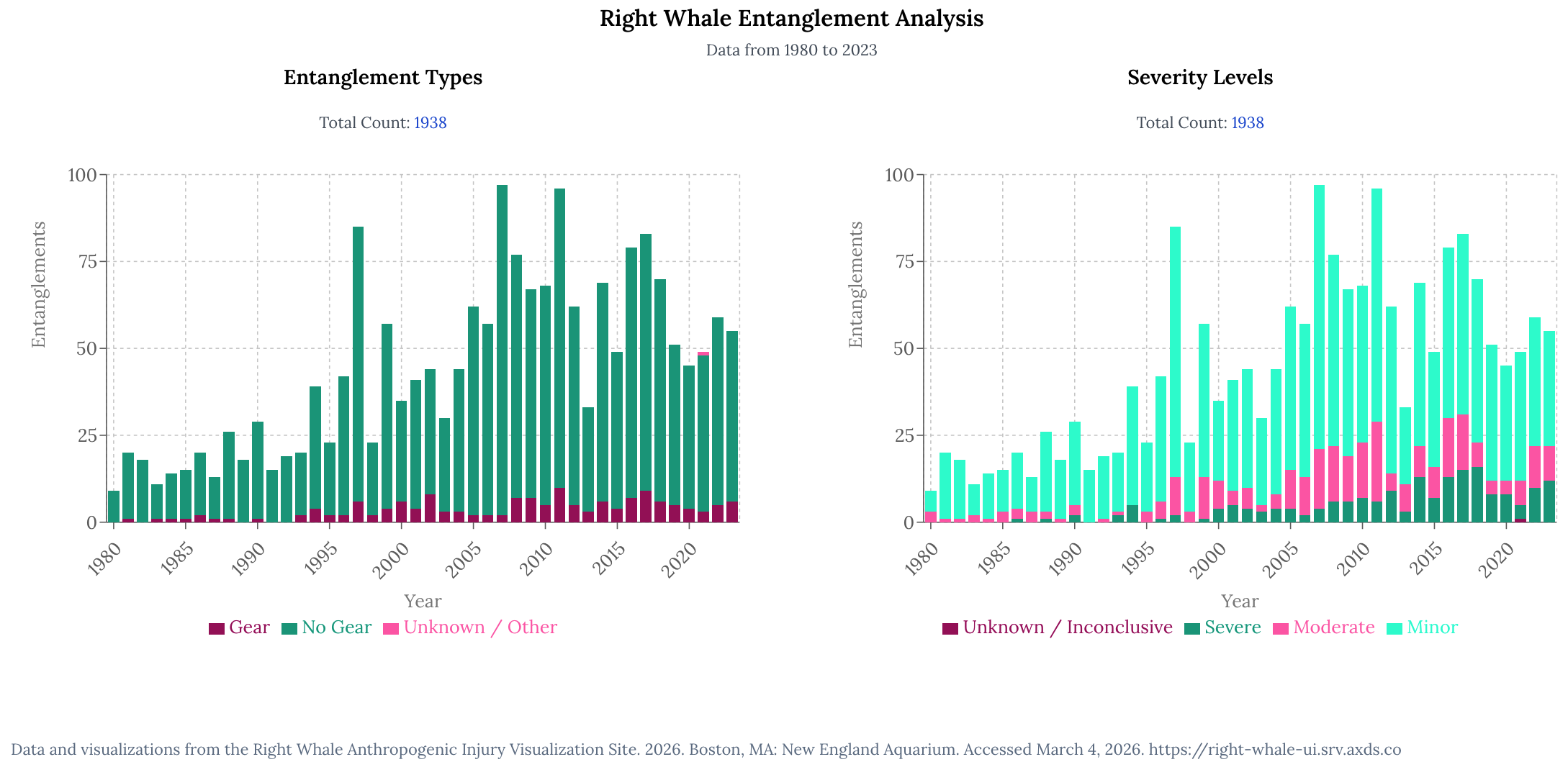
Visualizations of right whale entanglement analysis since 1980, showing trends in entanglement types and severity levels. NO GEAR refers to entanglements detected through photographic analysis of scars and GEAR refers to documentation of whales with attached gear. Credit: Right Whale Anthropogenic Injury Visualization Site/New England Aquarium.
North Atlantic right whales use the waters off Maine for feeding, breeding, and traveling.
- Through increased survey and passive acoustic monitoring efforts, right whales have been detected every month of the year in waters where Maine lobstermen fish.
- A persistent aggregation of > 90 right whales was seen off Maine in January 2025.
- Traps used in Maine's lobster fishery sit on the seafloor are retrieved with buoy/end lines, which persistently hang in the water column while the gear is deployed. Whales can become accidentally entangled in these ropes in areas where whale habitat and fishing gear overlap.
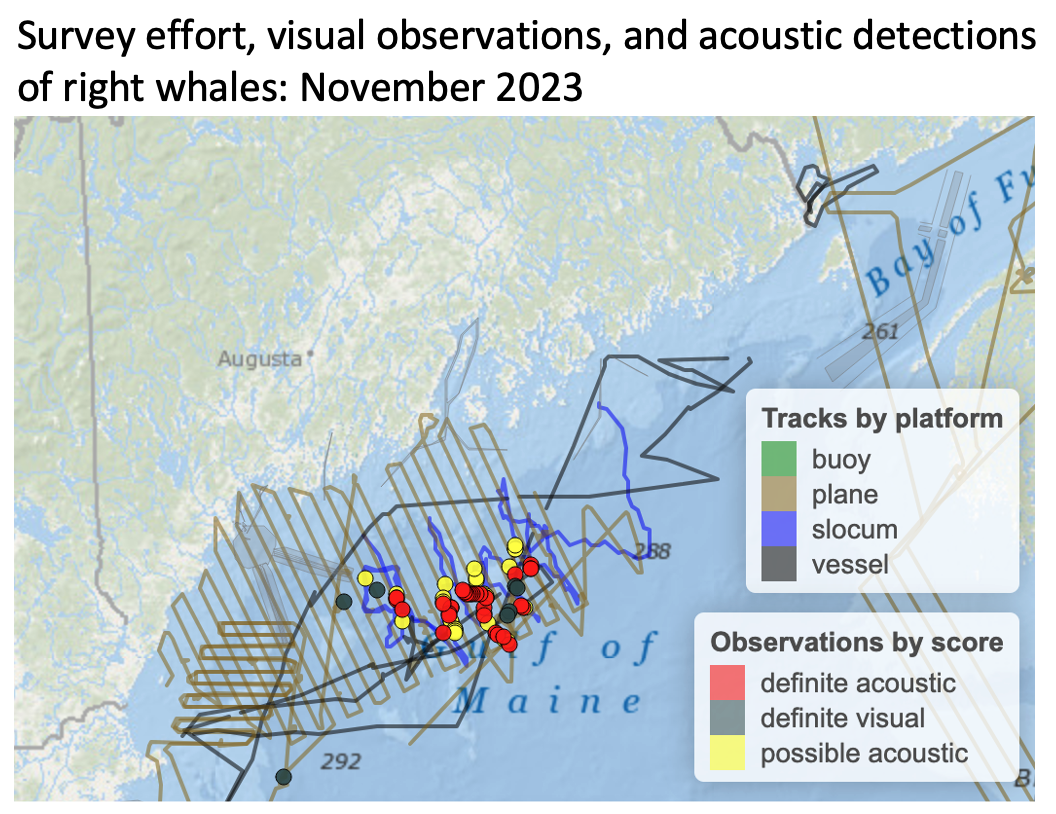
Survey effort, visual observations, and [slocum glider] acoustic detections of North Atlantic right whales, using November 2023 as an example. See WhaleMap for additional data.
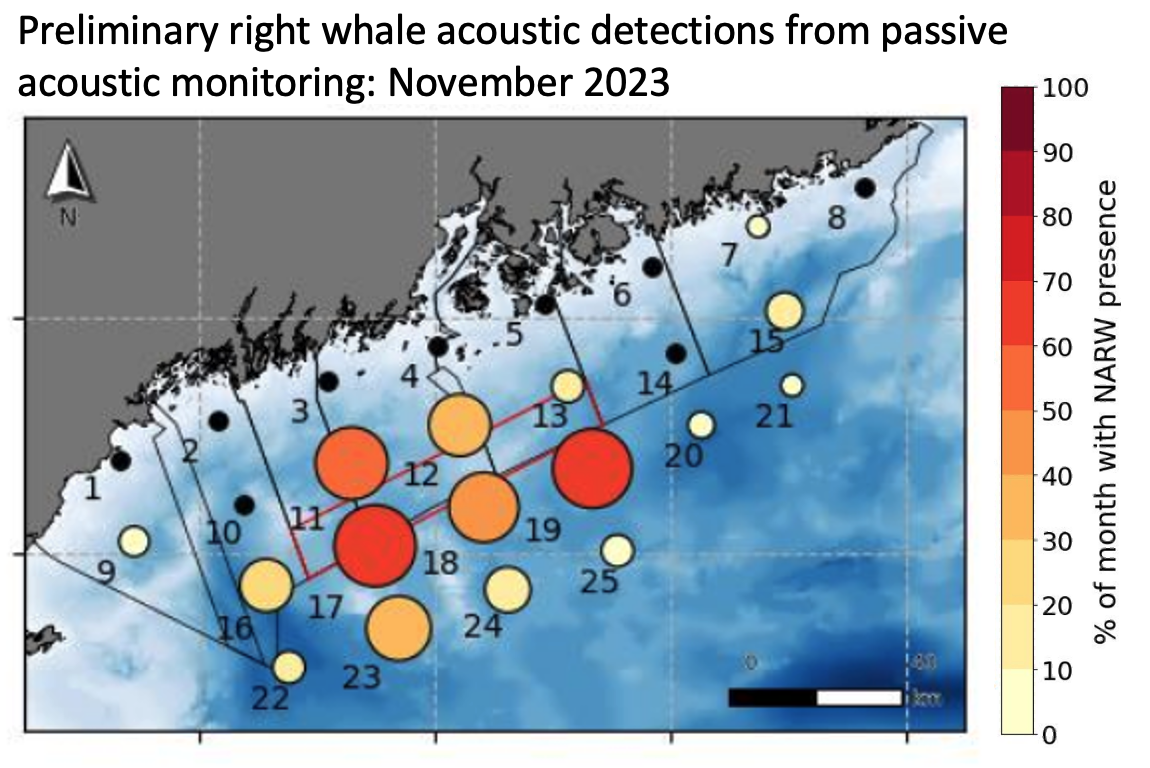
Acoustic detections (from bottom-mounted recorders) of North Atlantic right whales, using November 2023 as an exmaple. See the Maine DMR Passive Acoustic Monitoring program for additional data.
Entanglement in fishing gear can be prevented AND fishermen can keep fishing.
There are several ways that fishermen can modify how they fish to protect whales from entanglement.
- State-specific gear marking allows entangling gear to be identified back to a particular fishery. This knowledge helps inform targeted regulations in the future. Since 2020/2022, rope from Maine needs purple/purple & green marks depending on how far offshore it is set. Gear marking regulations could be improved to make recovered gear identification more successful.
- Modern manufactured ropes used in commercial fishing are incredibly strong. Weak inserts are currently required in lobster buoy lines. However, fully transitioning to weak rope ( < 1,700 lb breaking strength) could help many whales break free of entangling lines so that they shed gear on their own.
- Ropeless or on-demand gear keeps vertical buoy lines out of the water column until the gear is ready to be hauled, which minimizes the overlap of whales and rope. On-demand gear could be used in right whale habitat areas to prevent entanglement. It could also be used in closed areas (like the Oct 1-Jan 31 LMA1 Restricted Area), so that fishermen can keep fishing even when whales are present.
- Maine DMR is working with lobstermen to test this gear across a range of bottom types and oceanographic conditions. Collaboration with the industry is key to put the smartest solutions in place.
- We advocate that the transition to alternative fishing gear needs to be supported by government subsidies and grants – such that fishermen do not bear the cost.
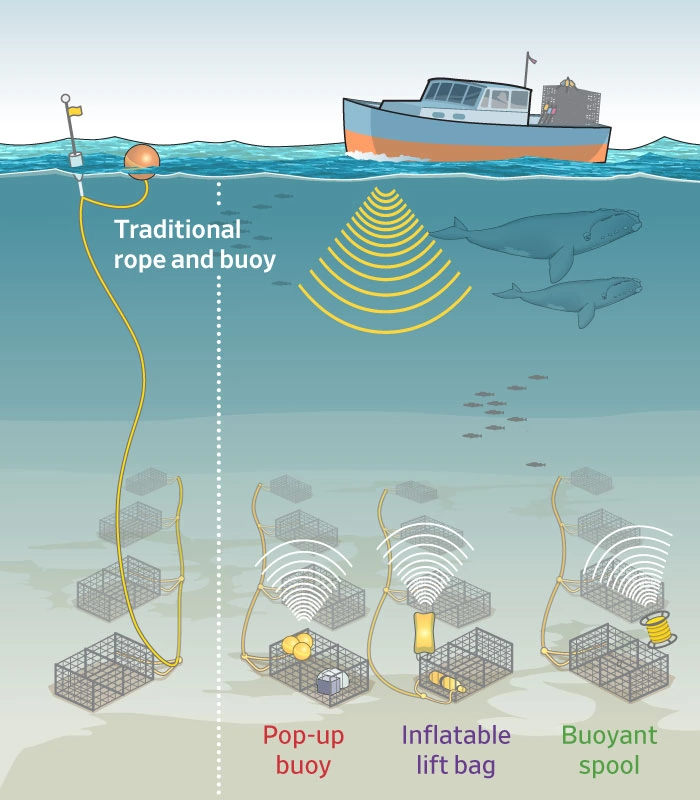
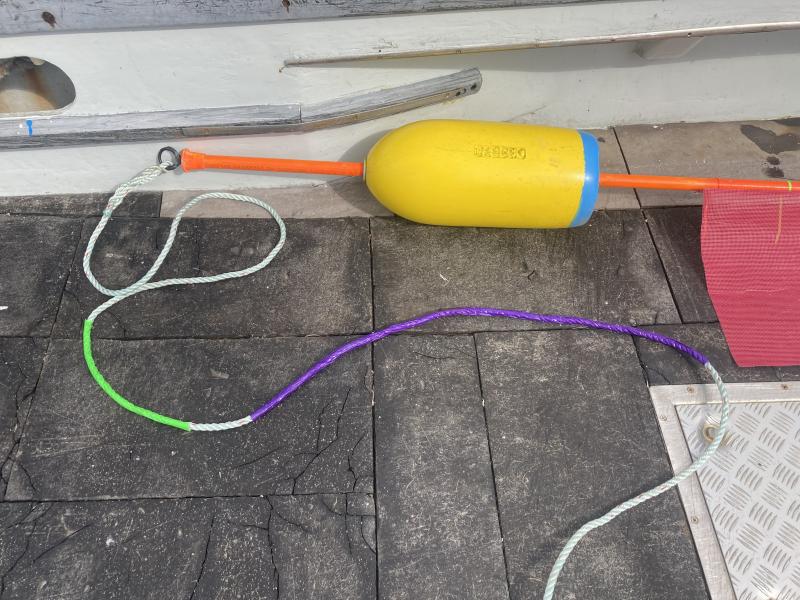
Right: example of purple and green marks required on the buoy/endline of traditional lobster gear set in offshore (federal) waters. Credit: NOAA Fisheries.
Left: examples of traditional and on-demand (ropeless) lobster trap gear. Credit: Wall Street Journal.
Want more information? See our FACT SHEET with links to the latest science.
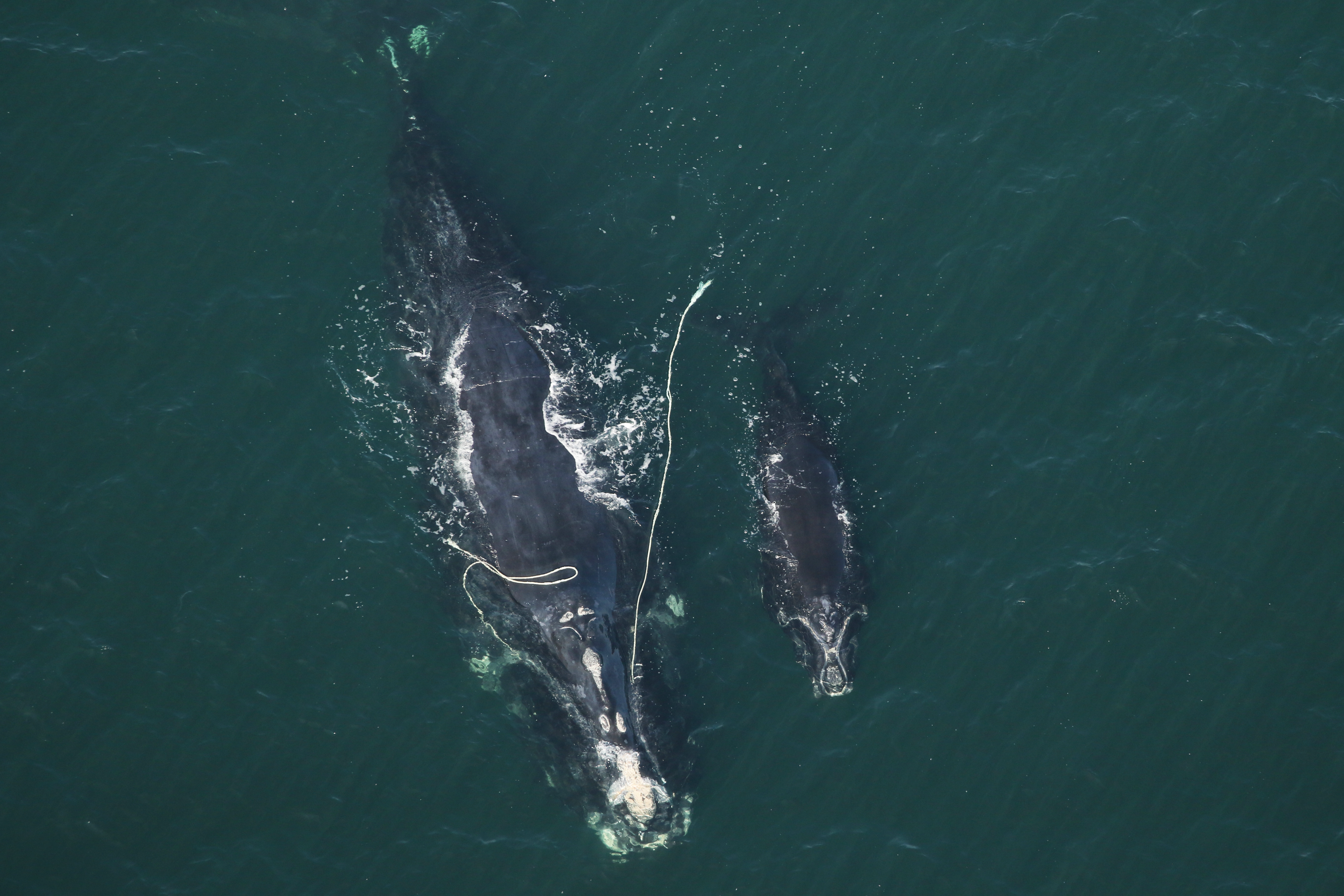
Right whale #3560 “Snow Cone” entangled with her calf in 2022. She is presumed dead after her health seriously degraded from this and a second entanglement. Her dependent calf did not survive. Florida Fish & Wildlife Conservation Commission, taken under NOAA permit 20556-01.
LEARN ABOUT THE ISSUES
NEWS
Explore statewide and national news, press releases, and op-eds on North Atlantic right whales, with a focus on the Gulf of Maine.
RESOURCES
Explore our compilations of peer-reviewed scientific reports, ongoing studies, science organizations, and interactive sighting maps.
ACTION
Explore ways to help advocate for sustainable fishing practices and the North Atlantic right whale’s recovery in Maine.
ABOUT THE COALITION
In 2021, our independent and volunteer group of scientists, educators, and citizens came together to address growing misinformation about critically endangered right whales in Maine. We work to inform the public about whale entanglement, highlight viable solutions to prevent entanglement, and push back against a misleading and factually incorrect narrative put forth by industry lobbyists.
In 2024, a North Atlantic right whale died from an entanglement in rope from Maine lobster gear, but industry leaders and Maine’s political delegation continue to minimize the problem. We support solutions that allow lobstermen to keep fishing, while also protecting whales from entanglement.
Join us in advocating for solutions that will protect right whales AND fishermen.
WHALE ENTANGLEMENT CAN BE PREVENTED.
Produced by Woods Hole Oceanographic Institution, the video below explains how whale entanglement occurs, and how collaborative problem-solving, gear research, and testing are helping to prevent large whale entanglement.
Maine Coalition for North Atlantic Right Whales
The mission of the of the Maine Coalition for North Atlantic Right Whales is to provide accurate information about critically endangered right whales and support policies to save them.